Making an I-Mac for the Rest of Us
So in 2004 I decided that I wanted to think differently. In pursuit of this, I purchased an iMac G5. It worked quite well for a few years until, rather suddenly, it started randomly shutting down. At the time I wasn’t too interested in determining the nature of its issues. I shelved it, pieced together a PC for $200 that was more compatible and powerful, and moved on. More recently, I became interested in repairing the machine after it had a brief resurgence as a temp computer for a roommate. The crashing was still happening, and I wanted to find out why.
When it had started crashing, I assumed I had a heat problem. In researching heat issues in iMac G5s online, I found I was not the only one. Apparently, the thermal design of the G5 was less than ideal and many people had difficulties with the machines. Apple had also initiated several recall and warranty extension programs on different parts in the G5 that had rather endemic problems (e.g. PSU, graphics chip, etc.).
My solution to the problem was simple: Currently, the machine was broken and if I couldn’t fix it, then I wasn’t anywhere different. If I could fix it, then hallelujah! I was one computer richer.
Part One
I first assumed, like I had all along, that the problem was heat-related. This lead me to numerous blog posts detailing how cutting a hole in the back of the machine and attaching a new fan had increased the stability of the system tremendously. I promptly went to work. (editor’s note: “went to work” in this case means “had my girlfriend who knows how to cut metal help me”).
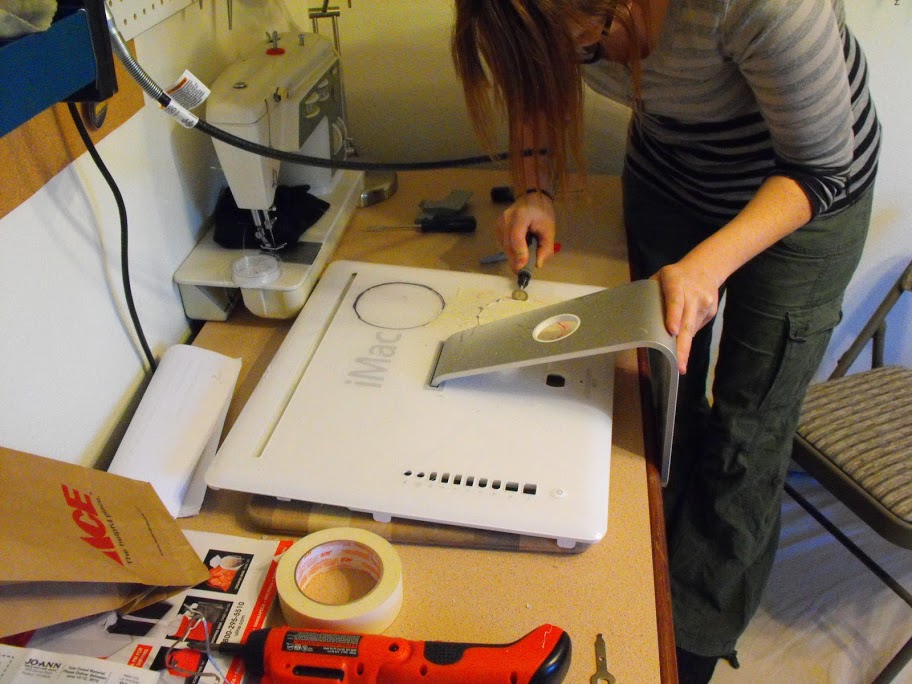
Here we see the industrious work involved in cutting a hole through an iMac.
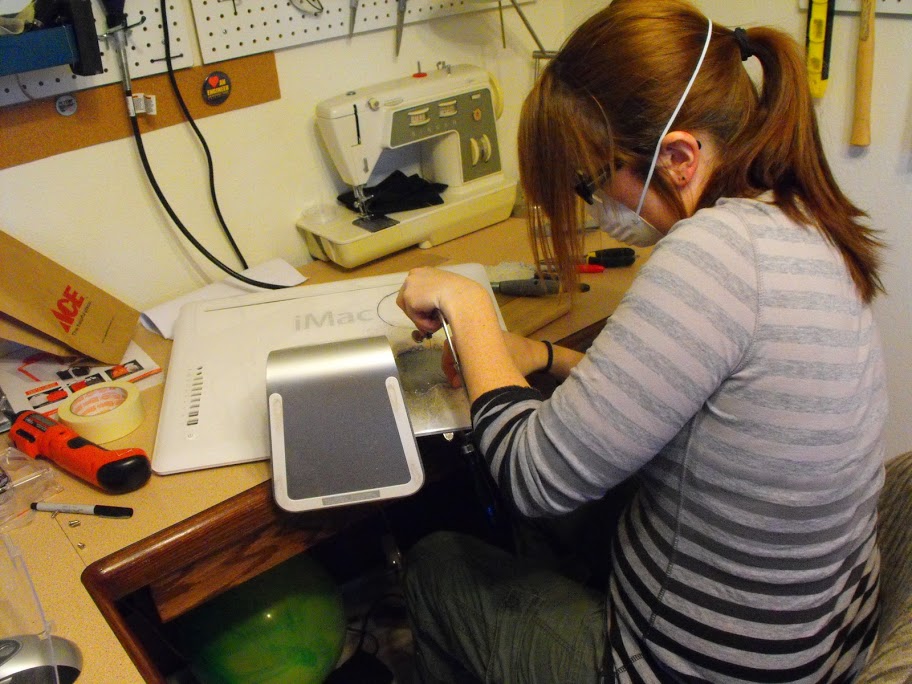
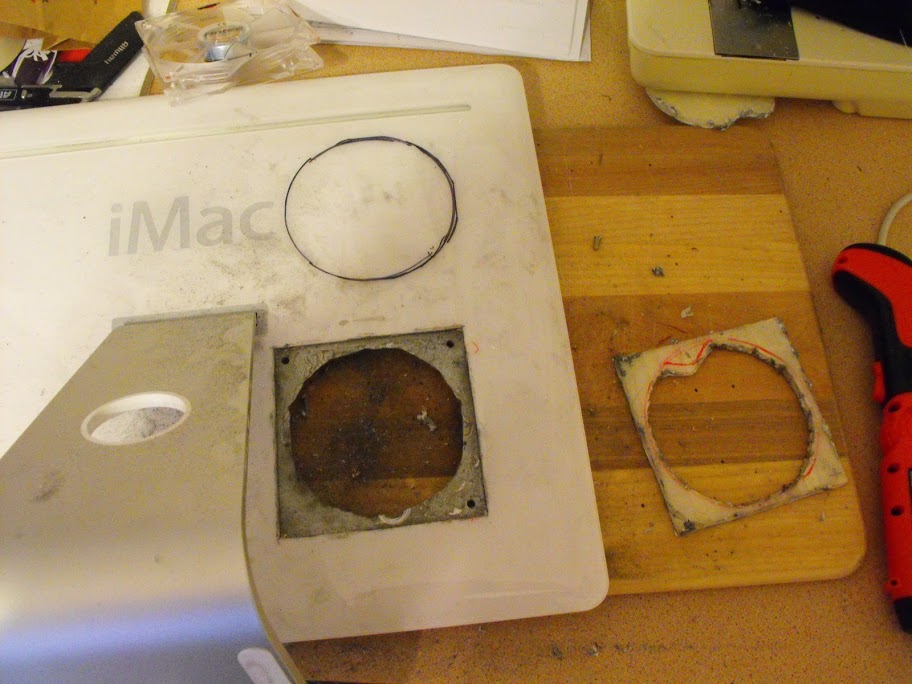
And then, after all that work…
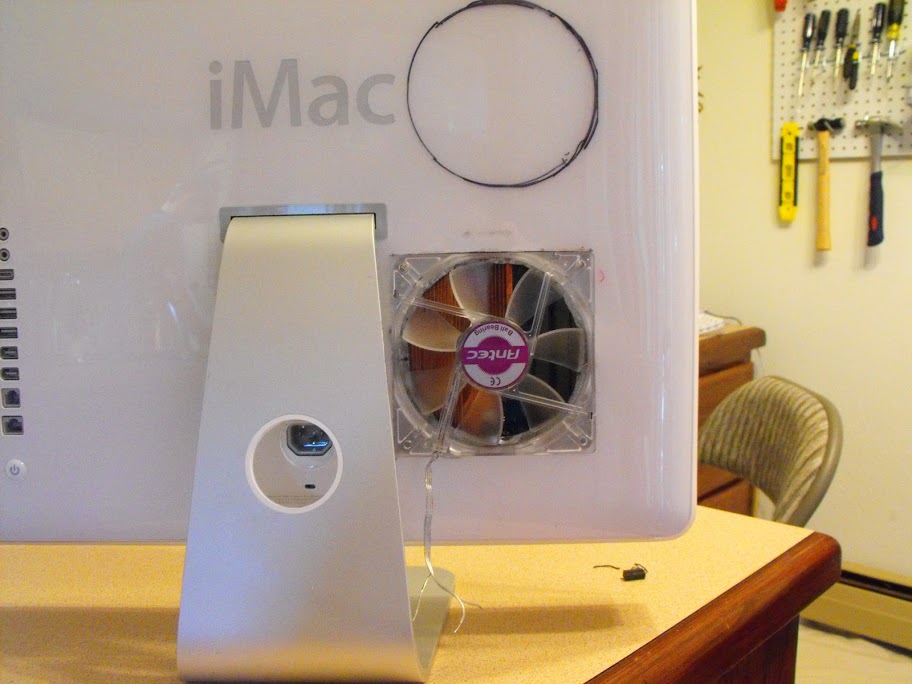
So we now had an extra fan to cool the machine. Unfortunately, upon testing, we found the fan did not alleviate the crashing problems.
Part Two
Now we were off to consult with Julia’s wise brother. Who had also been reading up on iMac problems and was certain we were suffering from a bad capacitor in the Power Supply Unit (PSU). We tore the PSU apart, identified a number of sub-standard capacitors splayed around the unit - seemingly at random. All this mess was covered in a liberal dosing of thermal caulk. Where ever there was room to squirt, the manufacturer of these PSUs had deemed it necessary to apply thermal caulk.
After clearing out some of the caulk, we began removing and re-attaching capacitors. After replacing every capacitor we could find (and several aborted re-insertions of the “clearly fixed” PSU that ended in more crashing), we had replaced every capacitor in the PSU. And still we had crashing.
(Unfortunately, I have no pictures of the capacitor replacement process as I forgot to bring a camera to Julia’s parent’s house.)
Part Three
During our work with the capacitors, both Davis and I had commented on what appeared to be the unreliable hard drive in the machine. Many of the crashes we had seen seemed to have occurred during heavy disk activity, which a bad hard drive could cause. Unfortunately, Davis did not have a spare hard drive we could test with, so we couldn’t be certain that our problem was not hard drive-related until I returned home.
After getting home, I brought the machine in to work for one last go-round before I gave up on the seemingly possessed entity that had once been my machine. Upon testing the hard drive, I discovered it was, in fact, failing. After replacing the failing drive, I found the machine was still crashing. I was ready to give up.
Then I remembered that Davis had mentioned something about faulty power boards (the portion of the PSU responsible for actually carrying current from the plug to the capacitors and out to the computer proper) on some iMac G5s. A cursory google showed numerous G5 PSUs for sale for a reasonable price. I ordered one. It arrived. I replaced the current PSU. The machine powered up. And stayed up for ~7 hours. This was far beyond the amount of time that it had ever survived before. I was marginally elated.
Edit: Capacitor Plague
Interesting that the iMac G5 line is specifically mentioned. This story shocks me. When I consider I paid ~$2000 for a machine with - arguably - known faulty capacitors, I want to smack Steve Jobs in the mouth (although he likely was not in charge of part selection on the model, I know his name, so…).